
¿Qué es Xochimilco?
Xochimilco: Agua, Tradición y Vida
Xochimilco es una de las zonas más antiguas y representativas de la Ciudad de México. Su nombre significa “lugar donde nacen las flores”, y desde tiempos prehispánicos ha sido un espacio dedicado a la agricultura mediante las chinampas, islas artificiales construidas sobre los canales. Este sistema, único en el mundo, convirtió a Xochimilco en un importante centro de cultivo y en un símbolo de la relación entre las comunidades y la naturaleza.
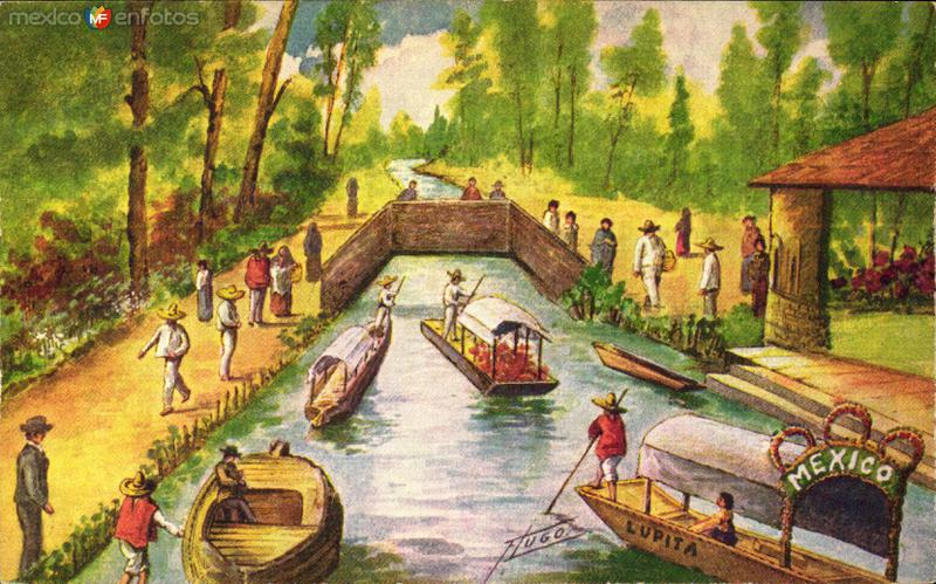
Hoy, Xochimilco es reconocido como Patrimonio Cultural de la Humanidad por la UNESCO. Sus trajineras, embarcaciones coloridas que recorren los canales, mantienen viva la tradición de celebrar, convivir y honrar la vida alrededor del agua. En ellas se escuchan músicas tradicionales, se comparten alimentos y se continúa el legado de los pueblos originarios.
Además, los canales de Xochimilco son hogar del axolote, un anfibio endémico y sagrado para las culturas antiguas por su capacidad de regeneración. El axolote representa la vida que persiste y se transforma, incluso en tiempos de cambio.
Xochimilco es, por tanto, un espacio donde el pasado y el presente se encuentran: un lugar de memoria, celebración y cuidado de la vida. Por ello, en esta exposición lo honramos como símbolo de identidad, tradición y esperanza.
What is Xochimilco?
Xochimilco: Water, Tradition, and Life
Xochimilco is one of the oldest and most representative areas of Mexico City. Its name means “place where the flowers are born,” and since pre-Hispanic times, it has been a space dedicated to agriculture through chinampas—artificial islands built on the canals. This system, unique in the world, made Xochimilco an important agricultural center and a symbol of the relationship between communities and nature.
Today, Xochimilco is recognized by UNESCO as a World Cultural Heritage Site. Its trajineras, colorful boats that navigate the canals, keep alive the tradition of celebrating, gathering, and honoring life around water. On them, people enjoy traditional music, share food, and continue the legacy of the original peoples.
The canals of Xochimilco are also home to the axolotl, an endemic amphibian considered sacred by ancient cultures for its regenerative abilities. The axolotl represents life that endures and transforms, even in times of change.
Xochimilco is, therefore, a place where past and present meet—a space of memory, celebration, and care for life. In this exhibition, we honor it as a symbol of identity, tradition, and hope.
Was ist Xochimilco?
Xochimilco: Wasser, Tradition und Leben
Xochimilco ist eine der ältesten und repräsentativsten Regionen von Mexiko-Stadt. Ihr Name bedeutet „Ort, an dem die Blumen geboren werden“, und seit vorspanischer Zeit ist es ein Gebiet, das der Landwirtschaft durch Chinampas gewidmet ist – künstliche Inseln, die auf den Kanälen errichtet wurden. Dieses weltweit einzigartige System machte Xochimilco zu einem wichtigen Anbauzentrum und zu einem Symbol für die Beziehung zwischen den indigenen Gemeinschaften und der Natur.
Heute ist Xochimilco von der UNESCO als Weltkulturerbe anerkannt. Seine Trajineras, farbenfrohe Boote, die die Kanäle befahren, halten die Tradition des Feierns, des Zusammenseins und des Ehrens des Lebens rund um das Wasser lebendig. Auf ihnen hört man traditionelle Musik, teilt Speisen und führt das Erbe der indigenen Völker fort.
Außerdem beherbergen die Kanäle von Xochimilco den Axolotl, eine endemische Amphibie, die für die alten Kulturen aufgrund ihrer Fähigkeit zur Regeneration heilig war. Der Axolotl steht für das Leben, das fortbesteht und sich verändert – selbst in Zeiten des Wandels.
Xochimilco ist daher ein Ort, an dem Vergangenheit und Gegenwart aufeinandertreffen: ein Ort der Erinnerung, der Feier und der Fürsorge für das Leben. Aus diesem Grund ehren wir ihn in dieser Ausstellung als Symbol für Identität, Tradition und Hoffnung.