
¿Por qué se decoran las tumbas en el Día de Muertos?
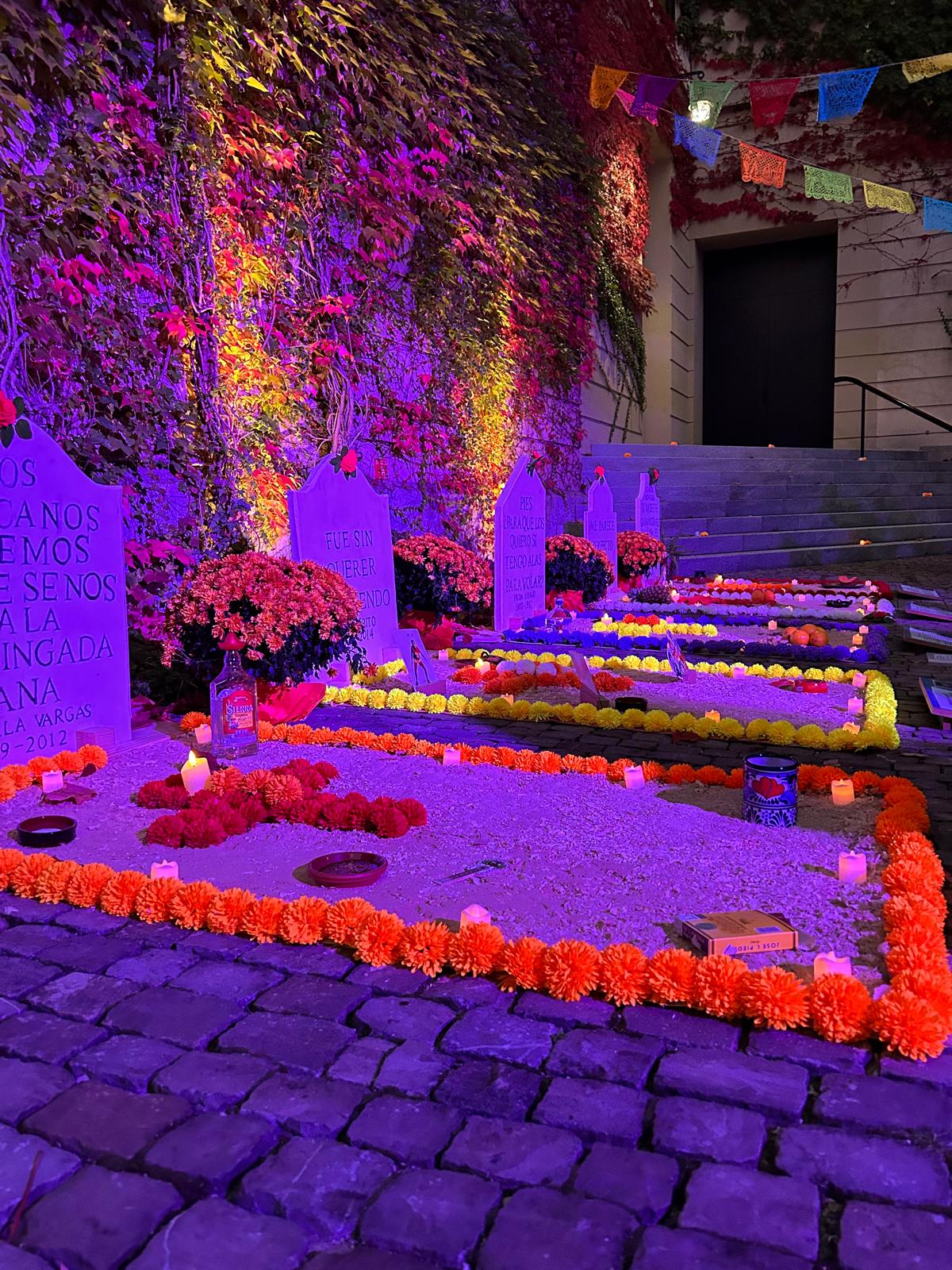
Las tumbas se decoran durante el Día de Muertos como muestra de amor, respeto y recuerdo hacia los seres queridos fallecidos. Esta arraigada tradición mexicana combina creencias indígenas y católicas. Se cree que los días 1 y 2 de noviembre las almas regresan al mundo de los vivos para estar con sus familias. Por eso, las tumbas se adornan con flores de cempasúchil, velas, papel picado, fotografías y los alimentos o bebidas que más les gustaban a los difuntos. El color y el aroma de estas flores guían a las almas hacia su altar, mientras que las velas iluminan su camino. La decoración de las tumbas es un acto de devoción y una celebración de la vida que mantiene viva la memoria y reafirma el vínculo entre generaciones. En los cementerios, las familias se reúnen, comparten comida, música y rezos, y transforman el lugar en un espacio lleno de luz, color y alegría. Así, el Día de Muertos no solo rinde homenaje a la muerte, sino que celebra la continuidad de la vida y la importancia de recordar con amor.
During the Day of the Dead, graves are decorated as a sign of love, respect and remembrance for deceased loved ones. This deeply rooted Mexican tradition blends indigenous and Catholic beliefs. It is believed that on 1 and 2 November, the souls of the dead return to the world of the living to be with their families. For this reason, graves are adorned with marigolds, candles, decorative paper cut-outs called papel picado, photographs, and the foods and drinks that the deceased enjoyed most. The colour and scent of these flowers guide the souls to their altars, while the candles light their way. Decorating the graves is an act of devotion and a celebration of life that keeps the memory alive and reaffirms the bond between generations. In cemeteries, families gather to share food, music and prayers, transforming the place into an area filled with light, colour and joy. Thus, Día de los Muertos pays tribute not only to death, but also celebrates the continuity of life and the importance of remembering with love.
Am Tag der Toten werden Gräber als Zeichen der Liebe, des Respekts und zur Erinnerung an verstorbene Angehörige geschmückt. Diese tief verwurzelte mexikanische Tradition verbindet indigene und katholische Glaubensvorstellungen. Man glaubt, dass die Seelen der Verstorbenen am 1. und 2. November in die Welt der Lebenden zurückkehren, um bei ihren Familien zu sein. Aus diesem Grund werden die Gräber mit Ringelblumen, Kerzen, dekorativen Papierausschnitten – sogenannten Papel Picado –, Fotos sowie den Speisen und Getränken, die die Verstorbenen am liebsten mochten, geschmückt. Die Farbe und der Duft der Ringelblumen führen die Seelen zu den Altären, während die Kerzen ihnen den Weg leuchten. Das Schmücken der Gräber ist ein Akt der Hingabe und eine Feier des Lebens. Es hält die Erinnerung wach und bekräftigt die Verbindung zwischen den Generationen. Auf den Friedhöfen versammeln sich die Familien, um gemeinsam zu essen, Musik zu hören und zu beten. Dadurch wird der Ort in einen Raum voller Licht, Farbe und Freude verwandelt. So würdigt der Día de los Muertos nicht nur den Tod, sondern feiert auch die Kontinuität des Lebens und die Bedeutung des liebevollen Erinnerns.